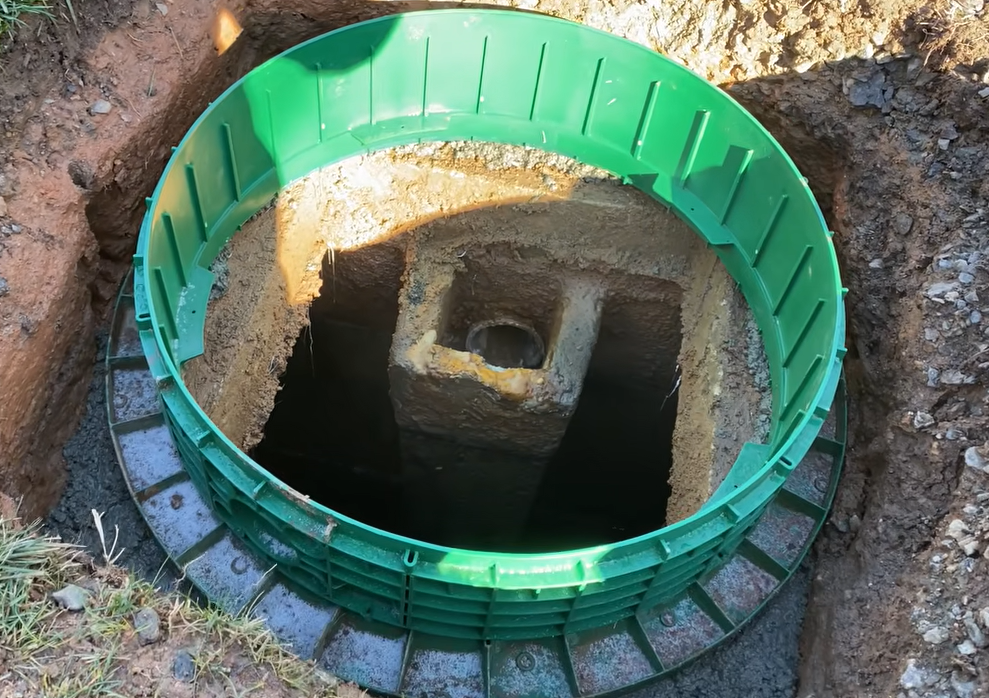
What a Septic Riser Is
A riser is a sturdy pipe — usually plastic or concrete — that extends from your tank’s access opening up to ground level, capped with a secure, sealed lid. On many older systems the tank is buried a foot or more underground, which means every pump-out starts with locating and digging it up. A riser ends that for good: the access point sits at grade, ready to open whenever the tank needs service.
Why Install One
A riser is a small one-time job that pays for itself over the life of the system. Here’s what it changes:
No digging on future pump-outs
Lower cost on every service visit
Faster inspections for sales
Easier to locate the tank
Safer, sealed access lid
Easy to check sludge levels
How Installation Works
We locate and uncover the tank access one last time, fit a riser sized to your tank and burial depth, and seal it to the tank so groundwater and odor stay out. The lid sits flush or just above grade and locks down for safety. Most installs are a single, straightforward visit. It often makes sense to install a riser at the same time as a pump-out, since the tank is already open.
Keeping the Tank Accessible
Septic systems last longest when they’re inspected and pumped on schedule, and the EPA specifically recommends keeping the tank accessible so that service actually happens. When the lid is buried, owners tend to put off pumping because it means a dig — and a tank that goes too long is exactly what leads to backups and drain-field damage. A riser removes that excuse.
A Secure, Sealed Lid
A proper riser is capped with a lid that seals against odor and groundwater and locks or screws down so it can’t be opened accidentally — an important safeguard around children and pets. It also makes it easy for us to lift the lid and measure sludge levels at an inspection without disturbing your yard. A buried or cracked lid offers none of that.